

WHERE THE WORK BEGINS
Short films help you discover your unique voice, build community, and empower you to take control of your craft.

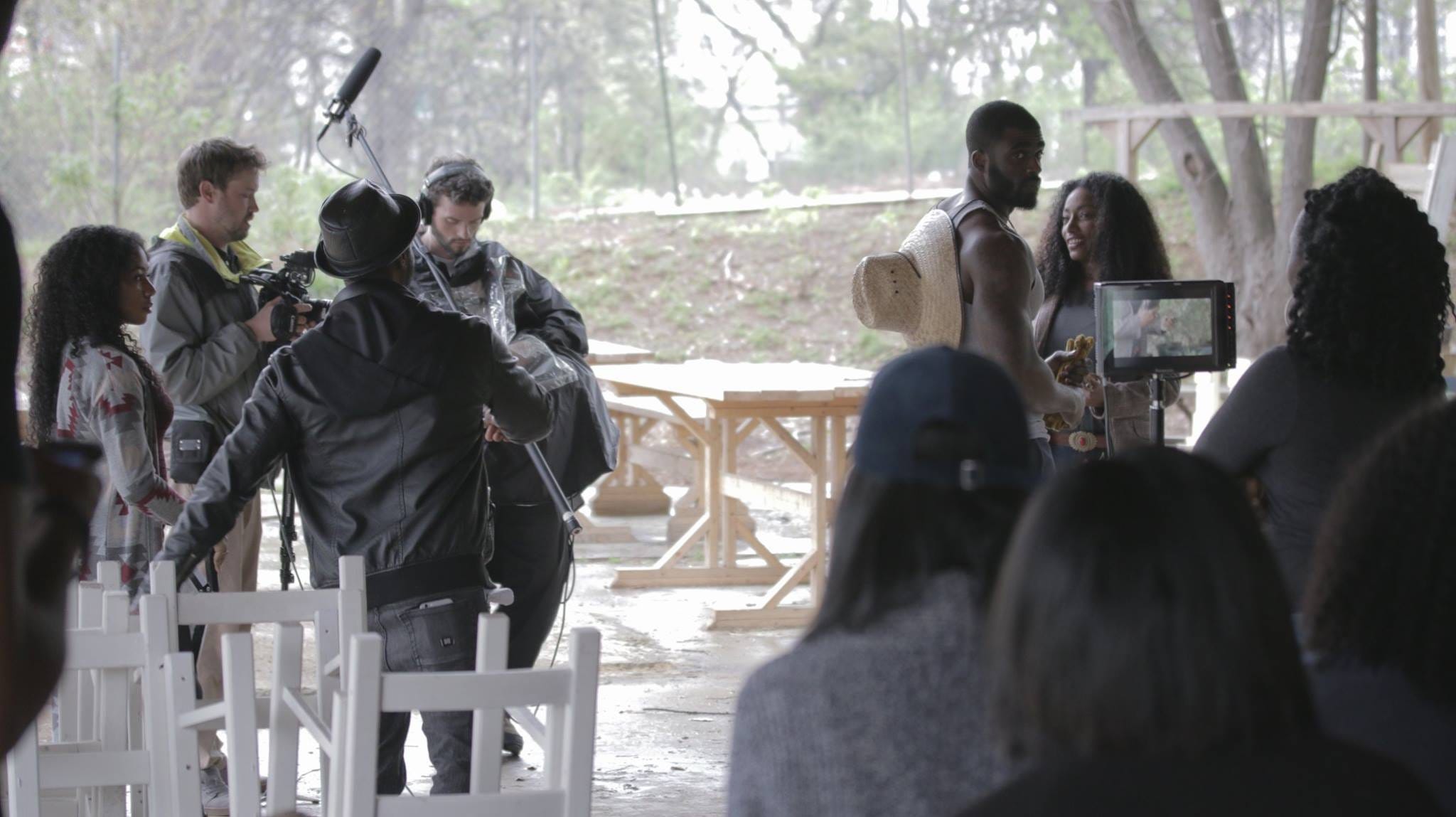
My journey into directing was shaped by hip-hop, music videos, live performance, documentary, and short films; experiences that each taught me about rhythm, storytelling, and resourcefulness. For filmmakers, short films are often where the real work of finding your voice and honing your craft begins.
I’ll come back to the full origin story, how hip-hop gave me my start, and the many people who helped shape me in those early years. That deserves its own space.
For now, I’ll focus on short films.
I started out as a documentary filmmaker, making short nonfiction films about Black life, Black memory, and the kinds of stories that felt urgent to me. My very first film was a documentary titled A Glimpse of Heaven: The Legacy of the Million Man March, which screened at the Reginald F. Lewis Museum in Baltimore, Maryland. It was early work, raw and amateur in many ways, but it still matters to me because it marked the first time I took the impulse to document our stories seriously enough to shape it into a film.
The first film I released onto the festival circuit, though, was a ten-minute documentary titled I Am Sean Bell, Black Boys Speak, made in the wake of Sean Bell’s killing in New York. Like many early films, it came out of urgency more than strategy. I needed to say something, and film was the tool I had to say it. That documentary went on to screen internationally, introducing me to the festival circuit and the broader possibilities of short films.
As I was embarking on the Sean Bell documentary, I was working in the shipping department at HBO and spending some time in the media library as well. I had shared my aspirations of becoming a filmmaker with a number of people there, and, understandably, those ambitions did not carry much weight in a space where such declarations were common. But a gentleman by the name of Peter Consiglio, who was the director of the graphics department, listened to me. He recognized that I had talent and abilities beyond the role I had been hired to perform, and because he knew I had some background in graphic design and a genuine desire to deepen that skill, he would occasionally allow me to go upstairs and sit with the designers in HBO’s graphics department, observing their creative process.
Although that opportunity was not directly related to film, it took me out of the shipping department and into a genuinely creative space. I was mesmerized by the level of talent and discipline those designers possessed, and the experience reinforced something I had always known about myself: I needed to stay connected to my creativity and to environments where imagination, skill, and artistic rigor were being taken seriously.
As I began mapping out a festival life for I Am Sean Bell and thinking about the body of work I wanted to build beyond it, I realized that many of the festivals I hoped to enter were sponsored by HBO, which meant the film would not be eligible for consideration as long as I remained employed there.
So I made a decision that some people around me considered reckless, and I left HBO.
The criticism was never really about the job itself. I was working in shipping, after all. It had more to do with the idea of walking away from a stable job at a prestigious company without any obvious safety net waiting on the other side. But I was not interested in proximity to the industry. I wanted to be inside the work.
And the irony is that the decision turned out to be exactly the right one.
The following year, I Am Sean Bell won top prize at the Media That Matters Film Festival, sponsored by HBO. If I had stayed, I would not have been eligible. One year, I was working in the shipping department at HBO, and the next I was back in the building as an independent filmmaker with a film that had just won top prize at a festival sponsored by the same company.
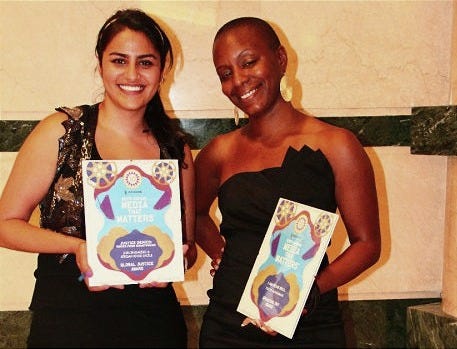
That experience made it clear early on: truly committing to your path requires making bold choices, even when they involve risk. Prioritizing your calling over comfort is what leads to growth and opportunity.
After Sean Bell, I directed another short documentary, Out of Our Right Minds: Black Women and Depression, which explored mental health in our community. Like the first film, it screened widely and sparked conversations at festivals and panels across the country. Those screenings reminded me that short films are not just exercises in craft. They are also a way to enter the larger cultural conversation through cinema.
From there, I began exploring other forms of short-form storytelling. I created a digital series called For Colored Boys, an eight-episode project that ran between 15 and 30 minutes each, and I want to acknowledge Michael “Boogie” Pinckney and Marc Lamont Hill, because without them, that project would not have been possible. I’ll return to that collaboration in more detail in another essay.
Later, I directed a narrative short called The Creed, a film I never released publicly. Each project sharpened something different in me as a filmmaker: my eye, my instincts with actors, my sense of pacing and rhythm, and my ability to finish a story with clarity.
And finishing is a discipline.
Short films teach the discipline of story economy. You learn to focus only on what’s essential, building scenes that serve the core emotion rather than unnecessary detail. This is a key takeaway for any filmmaker.
Short films also build the critical skill of working with the resources available. Learning to craft stories around what’s accessible fosters creativity and adaptability, key traits for growth as budgets and projects scale.
Another skill that became incredibly important to me early on was editing. I studied at the Digital Film Academy in New York, where I learned the filmmaking process from writing and directing to post-production, and one of the most valuable things I took from that experience was learning how to edit my own work. Editing gave me independence because I never had to wait for someone else to shape the film before I could see whether something was actually working. I could experiment, make adjustments, and discover the story’s rhythm for myself.
But editing gives you more than independence.
Some of the strongest directors are also editors, especially in episodic television, because once you understand editing, you begin cutting the episode in your head as you shoot. You know what coverage is necessary and what is not, which means you do not overshoot. You begin to understand rhythm, pacing, and the way a scene will ultimately breathe in the final cut. Actors can usually feel the difference when working with a director who truly understands coverage and editorial rhythm, because the direction becomes clearer and the choices more intentional.
Editing teaches you to shoot strategically. It sharpens your instincts around story and performance, and it gives you a deeper understanding of how all the pieces of a film ultimately come together.
Today, the barriers to making short films are lower than ever. Filmmakers can shoot entire projects on phones, edit on laptops, and distribute their work directly to audiences. We are also living through the rise of micro-dramas and vertical storytelling, forms that continue to expand the possibilities of short-form narrative.
Years ago, my producing partner Michael “Boogie” Pinkney and I experimented with something similar when we created a series called Black AF, with vertically shot episodes that ran no more than five minutes. At the time, it felt experimental. Now that format has become an entire category of storytelling in its own right.
All of these point to a simple truth: there are no excuses not to create now.
Short films remain the most effective way to develop your voice as a filmmaker. They serve as both calling cards and laboratories - helping you experiment, sharpen instincts, and understand your identity as a storyteller.
For many, short films mark the true beginning of the filmmaking journey.
And in that spirit, I want to share one of my earlier works.
THE CREED.
The Creed follows a couple in the wake of their son’s killing by a police officer, as grief reshapes their relationship and presses them into a space where love, anger, and loss begin to collide, ultimately pushing the father toward a decision that cannot be undone.
I wrote and directed the film, and we shot it in September 2016. Nearly ten years later, I’m releasing it publicly for the first time. I made it three years before directing my first episode of television on Queen Sugar, so it falls within a period before my episodic directing career, when I was still shaping my visual language, instincts, and voice through short-form work.
There are some films you make that stay with you. Watching this now, I can see the artistic risk in the work, the instinct already alive in it, and the places where I was reaching toward something I did not yet fully have the language for. I can also see the moments where it landed, where the work connected in a way that still feels true.
The film was executive produced by Marc Lamont Hill and me, senior produced by Michael “Boogie” Pinckney for Black Noise Media, and produced by Wendell Jordan for Legacy Media LLC, along with Shareese Thompson and Jairo for JARO Media LLC.
It stars Yolonda Ross, Akintola Jiboyewa, Ruslan Verkhovsky, Wendell Jordan, Malcolm Brickhouse, Alfonso Johnson, and Marcellus Lewter.
Cinematography by J. Anders Urmacher. Music by Paul Mounsey.
Shot in Brooklyn, New York.
I’m sharing it now not as a finished statement, but as part of the journey, the work, the growth, the evolution. This is what it looks like to be in process.
If you’re a filmmaker, I hope you see what’s possible.
If you’re an actor, I hope you feel the intention behind the work.
Below, I’m stepping into a LAB lesson on how to make your own short film, from shaping the idea to building it, shooting it, and finishing it with intention. This is the work behind the work, the discipline, the choices, and the process that turns an idea into something real.
That lesson is available to paid subscribers.
