


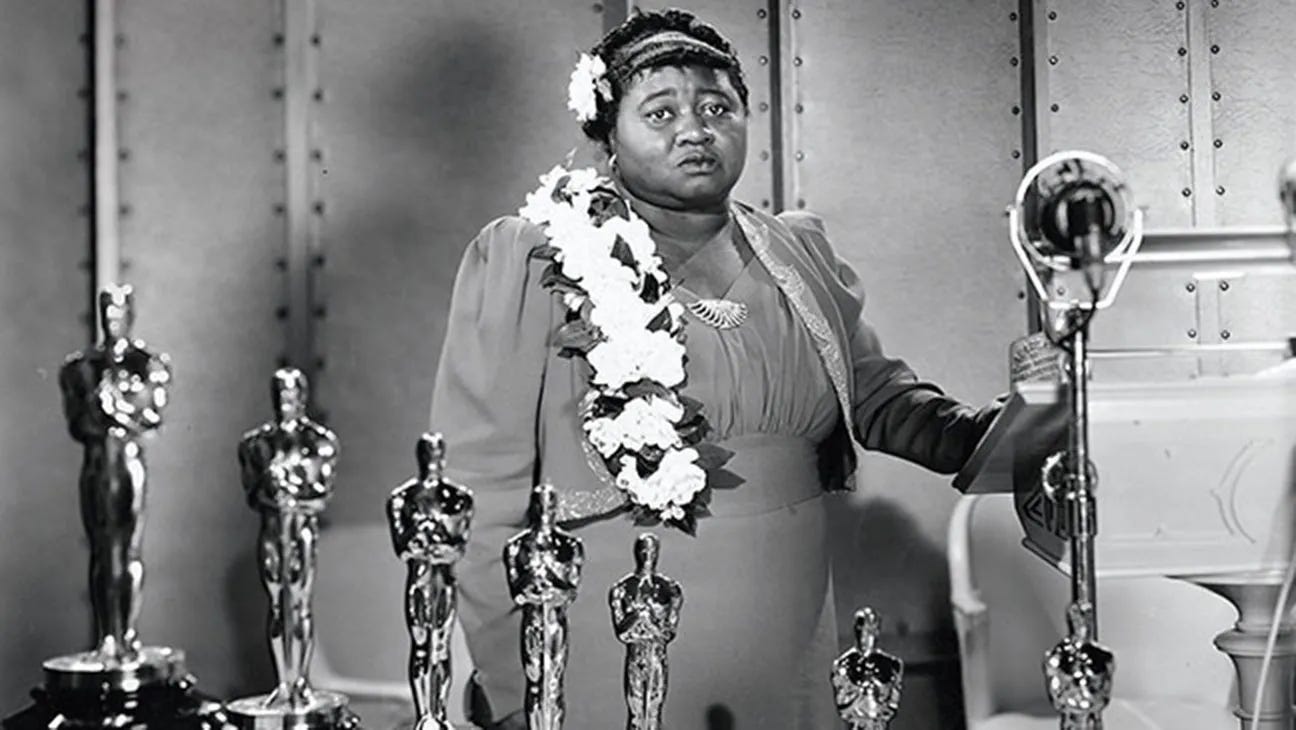
Every so often, I hear an artist speak about being overlooked with such intensity that it reveals something deeper than disappointment. It reveals a kind of dependence, not on the work itself, but on being affirmed for the work, on being named, on being celebrated in real time, on being publicly recognized as worthy.
I understand that longing because I understand what it means to labor in public and private, to give years to something exacting and uncertain, to shape a life around a gift that does not always return anything immediate or tangible.
I understand wanting to be seen, wanting the work to travel, wanting the people whose opinions seem to matter to reflect something back to you that confirms your devotion has not gone unnoticed.
And while I understand that longing, I also recognize it is one of the great spiritual dangers of a creative life.
If recognition is the thing sustaining you, what happens when it doesn’t come? What happens when the room goes quiet? What happens when the peers you hoped would champion you remain silent, when the institutions you hoped would validate you turn their attention elsewhere, when the culture does not reflect back to you what you believe you have earned?
That question matters because, more and more, I find myself wondering whether some artists are truly devoted to the work, or whether they are devoted to being seen doing the work. Those are not the same devotion. One can carry you through a lifetime. The other collapses the moment attention shifts.
Support, community, and encouragement matters, because none of us are beyond the human need to be witnessed. We want to know that our labor is landing somewhere, that the years we have given to craft and discipline and study and becoming are not simply vanishing into air. There is nothing shameful about wanting resonance, and for your work to reach beyond you.
But if your deepest orientation is toward applause, then your practice will never be stable. You will be governed by weather, by trends, by access, by who called, by who posted, by who included you, by who failed to, and you will begin to confuse visibility with value, attention with alignment, and mainstream recognition with truth. That confusion can distort an entire life.
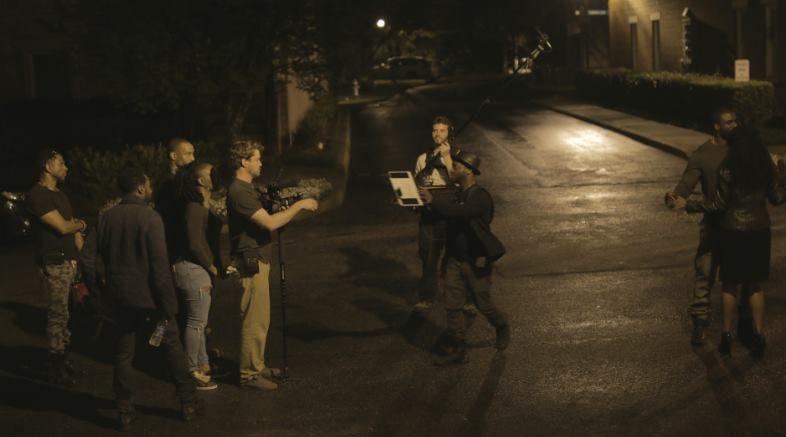
I was an independent filmmaker for fifteen years before I entered television, and fifteen years is a long time to remain committed to something that does not always reward you in obvious ways. Yes, I had support, yes, and an audience. Yes, there were people who saw me, but if I had measured the worth of my life and my work by who was publicly celebrating me, by whether the right gatekeepers were naming me, by whether the larger culture had decided to place me somewhere visible, I would have abandoned myself long before anything shifted professionally.
The artist life asks for something more durable than that. It asks for an interior anchor. It asks for a reason that can survive obscurity, delay, misunderstanding, and silence.
There is a saying that if it is not in the mainstream, it is not in your bloodstream, and I understand what that phrase is trying to name, which is the seductive power of visibility, the way artists can begin to feel that if the wider machine has not acknowledged them, then somehow they do not fully exist, as though obscurity were proof of insufficiency, as though delay were a verdict, as though the work had no pulse until the culture certified it.
But the mainstream has never been the sole keeper of what is true, and it has certainly never been the sole keeper of what is excellent. Often it is simply the keeper of what is visible in a given moment, and visibility is not the same thing as depth, not the same thing as rigor, not the same thing as calling, not the same thing as devotion.
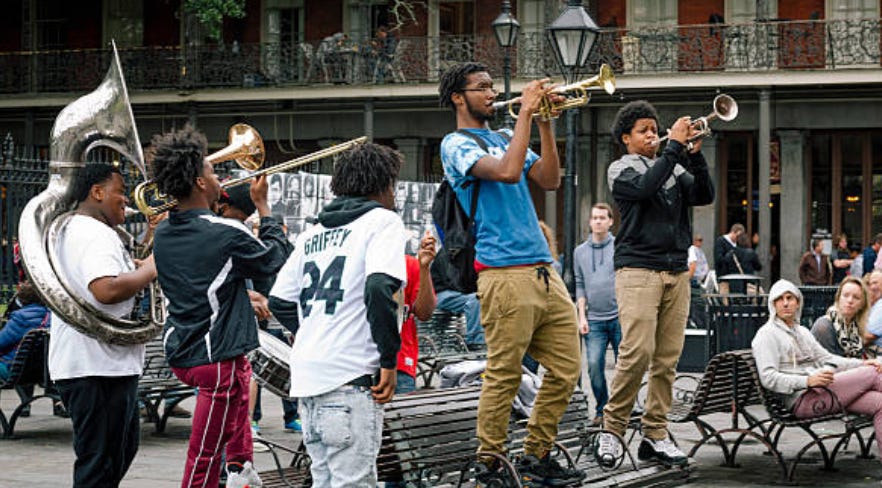
Being from New Orleans teaches you that in your bones. This is a city where art is not some decorative attachment to life. It is life. It is breath. It is inheritance. It is ritual. It is labor. It is survival. It is joy.
It is the old man who has been playing his horn for decades with a depth the world may never properly reward. It is the musicians who have given their whole lives to sound, who have played in clubs and on corners and in parades and funeral processions and sanctified spaces, who have shaped the atmosphere of a city and never once been given the kind of mainstream spotlight people elsewhere treat as the final measure of significance. It is the culture bearer who keeps showing up, not because the cameras came, not because a magazine called, not because an industry machine anointed them, but because the art itself is the calling.
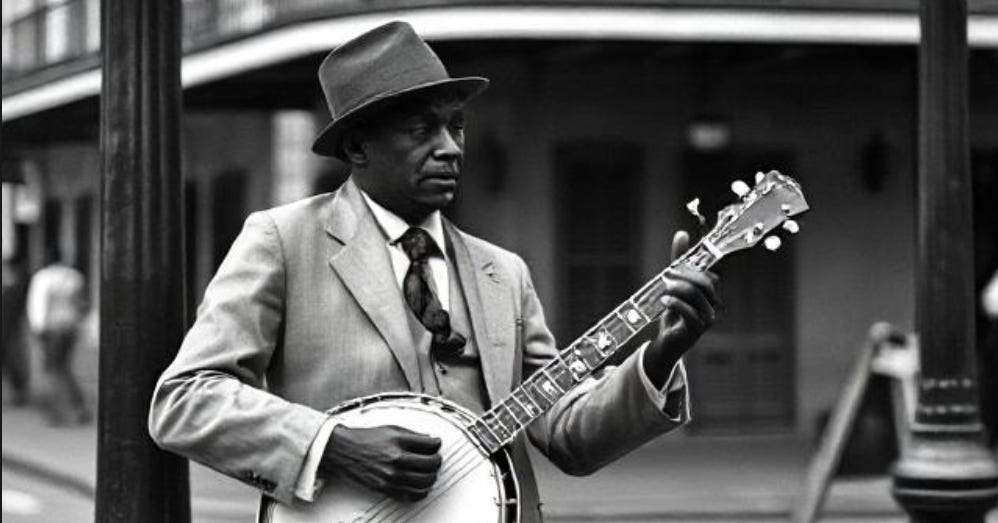
In New Orleans you see, if you are paying attention, that there are people who live and die in service of the gift, and whether recognition finds them or not does not alter the sacredness of what they have given. The work is still the work. The devotion is still the devotion. The beauty is still the beauty.
That matters to me because it reminds me that some of the purest artistic lives are being lived far from whatever the mainstream is looking at that week. They are being lived in neighborhoods, in churches, in rehearsal rooms, in social aid and pleasure clubs, in traditions passed hand to hand, body to body, breath to breath. They are being lived by people whose names may never be widely known and whose commitment is no less profound for it. If you come from a place like this, if you have watched people offer themselves to the art with that kind of steadiness, then you understand something early that the culture often learns too late, which is that applause is not the same thing as purpose, and being witnessed at scale is not the same thing as being in right relationship with your calling.
As Black artists, we should know this in an even deeper way because we come from lineages of brilliance that were not properly recorded, not properly rewarded, not properly protected. We come from people whose gifts were undeniable and whose names were still made vulnerable to erasure.
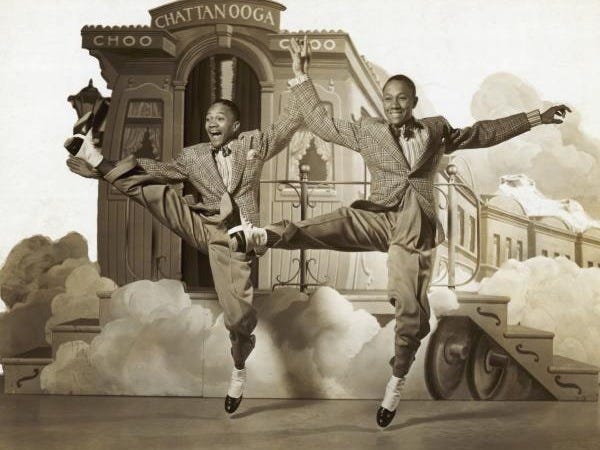
Black singers, dancers, actors, musicians, writers, storytellers, image makers, performers of every kind, people who shaped the very language of American culture while being denied the dignity of full humanity, people who entered through back doors and still transformed the room, people who stood under lights while being dishonored, people whose genius was consumed while their personhood was treated as disposable.
So when I think about success, I cannot think about it only in the language of awards, lists, followers, invitations, and press. I think about those who made work inside conditions designed to diminish them. I think about those who remained devoted while being excluded, who kept refining while being denied, who kept making beauty while the world refused to name them equal to what they had made. That history should humble us. It should also deepen us,.
One of the more troubling habits I see among artists is the insistence that they are not where they are supposed to be, and while I understand the ache inside that statement, I also think it can conceal a dangerous entitlement to a particular timeline.
It can suggest that the artist believes the journey should have unfolded according to their preferred design, that the unfolding itself is somehow in error because it has not yet arrived at the image they had in mind. But an artistic life does not obey our vanity. It asks for discipline, for surrender, for patience, for a relationship to process that is deeper than ego and more enduring than disappointment. It asks us to remain present while the thing is still being built, even when we cannot yet see its final shape. It asks us to trust what is taking form in us before the world confirms it, and that kind of trust is not passive, it is rigorous, it is mature, it is spiritual work.
Not everyone is rooting for you, and you have to be okay with that. Not everyone will be happy for you or understand what your life is becoming. Some people will grow quiet when your work begins to gather attention. Some will want proximity to your light but feel no real reverence for the labor that produced it.
Some will celebrate you publicly and resent you privately. Some will only know how to relate to you when they feel superior to you, necessary to you, or reflected favorably by your success. You have to make peace with that, and more than that, you have to stop taking it personally.
What others cannot extend has absolutely nothing to do with your deserving and everything to do with the condition of their own spirit. It is difficult for a person at war with themselves to be fully at peace with another person’s becoming. It is difficult for someone estranged from their own joy to rejoice without complication in the joy of someone else.
You cannot organize your life around trying to extract wholeheartedness from people who do not possess it.
You also cannot afford to become spiritually disordered in response. Envy and resentment has consequences. So does the quiet belief that what has opened for someone else should have opened for you first. Those energies do not sharpen the artist, they corrode the vessel. They interrupt gratitude, and distort perception. They make it difficult to receive your own life because you are too busy keeping score of somebody else’s.
And desperation has its own distortion. There is a quality of desperation that repels, not because desire is wrong, but because panic alters presence. It narrows the artist. It makes every interaction feel weighted with need, every opportunity feel like rescue, every delay feel catastrophic.
This is why I believe so deeply in artists building lives that can hold them. Do what you need to do to sustain yourself. Protect your livelihood, your dignity and your nervous system. There is nothing honorable about living in such a state of depletion that the work becomes contaminated by fear. The work asks for openness and steadiness. It asks for devotion that is not frantic. It asks for gratitude, not the shallow performative kind, but the real kind, the kind that allows you to recognize what is already here, the kind that understands that the process itself is not a detour from the blessing, it is the blessing.
My why has never been reducible to ambition.
My why is, first, that this is what I was born to do. It is the most coherent language my soul has ever spoken. It is the place where instinct, image, memory, emotion, discipline, and form all meet. I cannot imagine walking away from it without walking away from myself.
But my why is also larger than self expression. It is bound up in lineage, in inheritance, in Black womanhood, in all of the women whose inner lives were never permitted the same horizon of possibility, women whose gifts had to live in the margins of duty, women who were asked to mother, to serve, to endure, to hold families and worlds together, while the deeper call inside them went unnamed or unanswered.
I am a mother, and one of the blessings of my life is that I have been able to mother without relinquishing the deepest truth of myself. I did not have to abandon the work in order to love my child. I did not have to disappear in order to nurture.
But many women, in ways large and small, have been made to believe that their calling and their caretaking could not coexist, that their own becoming was indulgent, that their gifts belonged behind something else.
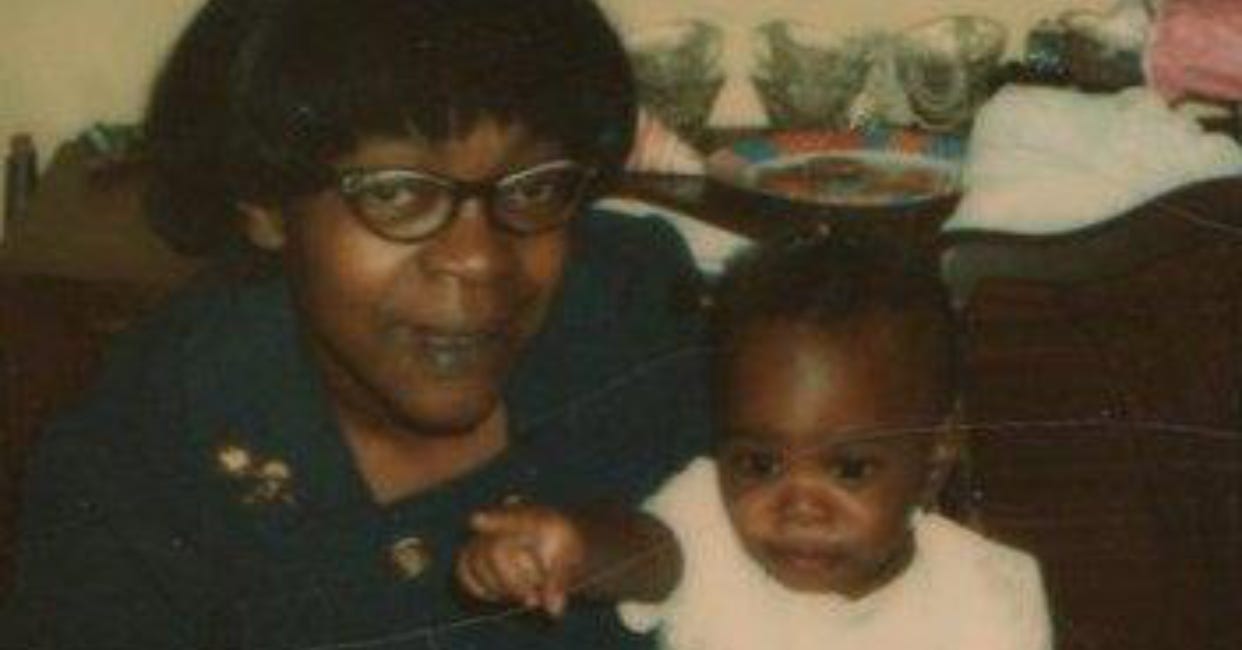
I think often about my grandmother, Lela May Malbrough - a talented tap dancer who danced with the Nicholas Brothers, and I think about what might have unfolded in her life had she been permitted a wider freedom, a fuller selfhood, a life less constrained by the imposed architecture of womanhood. I think about who she might have become if she had been allowed to live more audibly inside her gifts, more fully inside her longing, more freely inside her own sense of possibility. And so yes, I do this for her.
I do it for the women whose names history did not bother to keep. I do it for the Black women artists whose brilliance remained local, private, interrupted, unarchived. I do it because, as Black people, as African people, as descendants of a tradition in which memory, story, music, gesture, and witness are sacred, we come from the lineage of the griot, from people for whom storytelling was never merely ornamental. It was how we carried ourselves forward. It was how we remembered what the world tried to erase. It was how spirit remained intact.
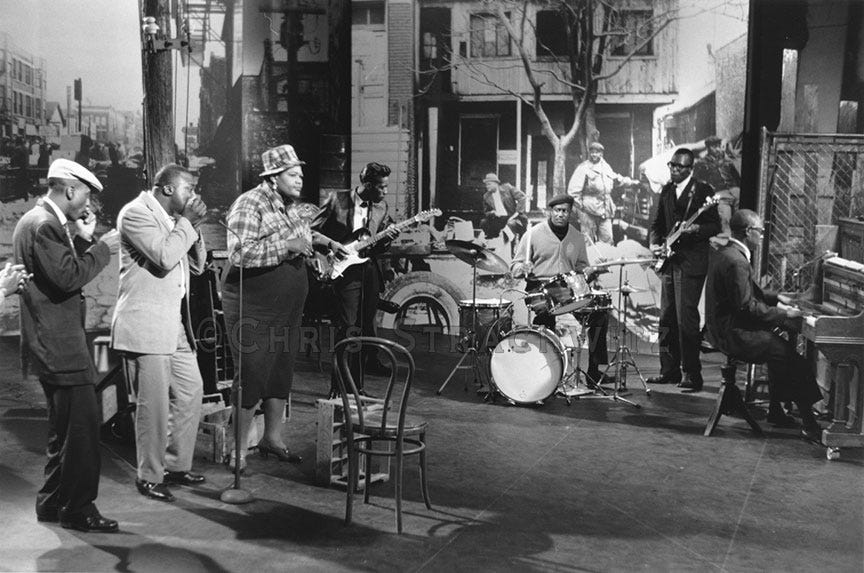
I do it for the artists who stood on stages under humiliation and still gave the audience everything. I do it for the musicians who played because the music itself was holy, whether fame ever arrived or not. I do it for the people who knew that the calling was reason enough. I do it for the ones who entered through the back door and still transformed the room. I do it because to make art, to tell stories, to shape image and feeling and meaning for a living, is an honor.
Recognition, applause, and awards are beautiful. I do not reject any of those things. I am grateful for every flower that has come my way. But not long ago, someone said something about me that moved me more deeply than any award ever has.
They said that I am one of television's most trusted visual storytellers.
That word, trusted, stayed with me because to be trusted is to be known not only for talent, but for integrity.
It means people trust me with their stories and their image. They trust me to hold emotional and cultural weight with care. They trust me not to flatten them, sensationalize them, or betray them for spectacle. To me, that is sacred. That reaches deeper than applause because it speaks to how one has lived inside the work, how one has handled the work, how one has honored the people inside the frame.
And perhaps that is the deeper question every artist must eventually ask, not only what do you want, but what are you in service to. Are you seeking to be admired, or are you seeking to be in right relationship with the work you have been called to do. Are you building a life around attention, or around truth. Are you chasing recognition, or are you answering an assignment.
Your why must be larger than your desire to be seen. It must be older than your ambition. It must be strong enough to survive silence, envy, delay, misunderstanding, even success itself.
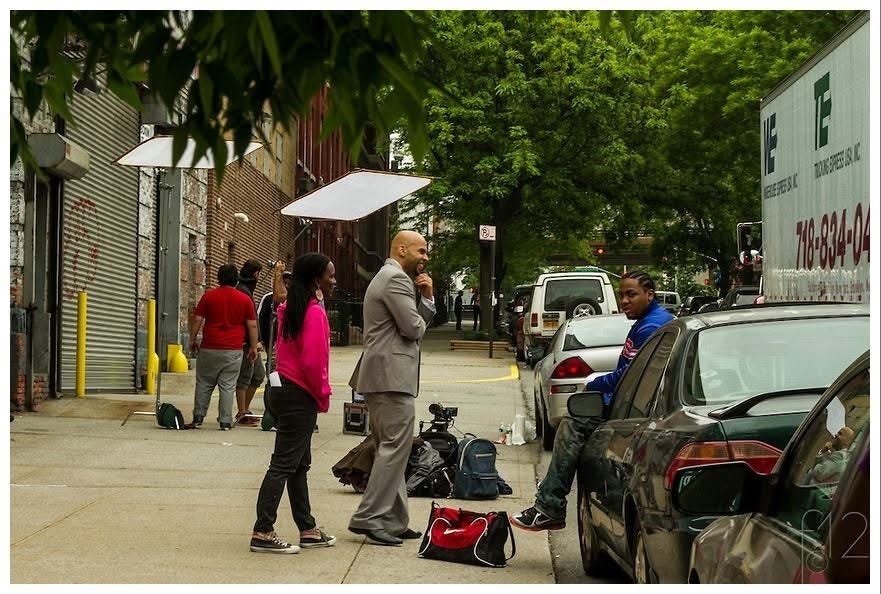
Do the work because it is yours to do. Do it because something in you would be diminished without it. Do it because you are in conversation with those who came before you, with those who were denied room, denied freedom, denied witness, and still found a way to make beauty.
Do it because the gift is sacred. Do it because there is honor in answering what called you here. Do it because, long before the world decided what to celebrate, there were people making holy things in small rooms, on street corners, in churches, in clubs, in kitchens, in rehearsal halls, in neighborhoods like the ones that raised us, and they understood something that many artists still have to learn, which is that the work does not become real when the world applauds it. The work is real because you have given your life to telling the truth through it.
And that, in the end, has to be enough.
About the Author
Stacey Muhammad is a writer, director, and daughter of New Orleans. Her lens is committed to the cinematic testimony of Black life and the unyielding brilliance of the Southern imagination. From her upcoming feature film, The Return, to her directing work on series including Amazon Prime’s CROSS, Queen Sugar, Power Book III: Raising Kanan, and Harlem, she tells stories where Black people are the architects of the narrative, not the scenery. She is the creator of The Director’s Notebook, a digital film school and creative sanctuary for those reclaiming their birthright through craft and truth.
I have both so much and so little to say. Thank you for this! It met me at the right time. Please continue doing what you are doing!
This really spoke to me because it put words to something a lot of people feel but do not always know how to say. I think what hit me most is the reminder that if you do this kind of work, your why has to be deeper than applause. Being seen feels good, being celebrated feels good, but if that is the only thing feeding you, then the quiet seasons will break you. Real devotion has to come from something deeper.
I also felt the part about New Orleans and Black artistry in a real way. So much of the most beautiful, soulful, and honest art has come from people who did not get the recognition they deserved, yet they still gave everything they had to the gift. That kind of commitment is powerful because it shows that the work is sacred whether the world claps for it or not.
What I take from this more than anything is that the work has to be personal, spiritual, and rooted in truth. Not in who notices, not in who posts it, not in who validates it, but in knowing deep down that this is what you were called to do. That kind of mindset keeps you grounded, keeps you humble, and keeps you creating from a real place.